Financial Literacy
Financial literacy is increasingly recognised as an essential life skill and a key driver of economic stability and well-being. According to the Organisation for Economic Co-operation and Development (OECD), it is a combination of awareness, knowledge, skills, attitudes, and behaviours that enables individuals to make informed financial decisions. People with stronger financial literacy are more likely to manage their finances responsibly, take a long-term view, and act proactively.
Economic literacy is equally important in empowering individuals to understand economic concepts, make informed decisions, manage resources effectively, and participate confidently in economic life. It enables people to assess, discuss, and respond to economic issues that affect them throughout the various roles they assume as consumers, workers, entrepreneurs, investors, and citizens. Enhanced economic literacy not only benefits individuals but also contributes to broader societal and national development by supporting inclusive and sustainable economic growth.
While financial and economic literacy are closely interconnected, one of the Central Bank of Malta's strategic objectives is to place greater emphasis on economic literacy. The Bank contributes to this objective through active participation in the Eurosystem Financial Literacy Network, Malta's Financial Literacy Forum, and a range of complementary initiatives. These include educational lectures, informative publications, social media campaigns, contributions to television programmes and podcasts. The Bank also provide informative sessions on counterfeiting.
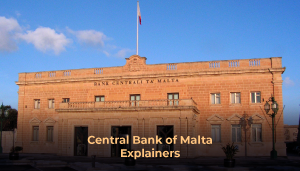
Visits to the Central Bank of Malta
The Central Bank of Malta also welcomes information/educational visits throughout the year. These sessions are hosted on the Bank’s premises. During the educational visit, students are given an overview of the role and functions of the Central Bank of Malta and its interaction with the Eurosystem. This is followed by a short presentation on security features of the euro banknotes and coins.
These sessions are offered mainly to secondary and tertiary school students who are following economics / business studies. The session is open to groups of a maximum of 30 students and presentations last approximately one hour.
To organise a visit, please contact us via our Contact Us Form. While every effort is made to accommodate requests, we regret this is not always possible.
Outreach programme
The Bank is very active when it comes to the promotion of financial education among professional cash handlers working in financial institutions, retailers and casinos, and offers both training and certification.
With the collaboration of the Ministry for Education and Employment, the Central Bank offers also information sessions on euro currency to State, Church and Independent schools, giving students the opportunity to appreciate the work that goes into the provision of our currency and be able to check their euro banknotes and coins to ensure that the currency they get is both fit and genuine.
The Bank also participates in Notte Bianca, using the cultural event as a way to reach out to the public about its activities, with employees on hand to explain how to recognise counterfeit notes and coins.
Other Educational Initiatives
John Earland Prize Fund
In 2005, the Central Bank of Malta established the John Earland Prize Fund. John Earland, a former Governor of the Bank, donated the sum of US$10,000 to establish a fund to finance the award of an annual prize for the best academic result or essay related to any of the functions performed by the Central Bank of Malta. The purpose of the award is to enhance awareness of issues relating to the Central Bank of Malta and to encourage the upgrading of skills and knowledge in this area.  Regulations can be downloaded here.